
The Future of Software Engineering with AI: Six Predictions
Notes from The Pragmatic Summit and ‘The Future of Software Development’ workshop

Two weeks ago, I hosted The Pragmatic Summit in San Francisco, a few days after attending a 50-person workshop entitled The Future of Software Development in Deer Valley, Utah. Each event attracted experienced software engineers, leaders, and deep thinkers to share thoughts about the state of the software engineering industry today and in the future.
It was well-timed, considering that right now seems like a period of change for tech that’s unfolding faster than before. That was a consensus opinion at both events, also held by veterans like Martin Fowler and Kent Beck, who said things haven’t shifted so rapidly during their 50+ years in the industry.
At the very start of this year, I predicted AI will write almost all code, going forward, and several others have said the same. But at the Pragmatic Summit, I met an embedded engineer writing Assembly and C code who is still writing more of his code by hand than with AI agents – and was the only person I spoke with in San Fran who was not yet “giving in” to AI agents.
Even so, today, this engineer has between a third and a half of their own low-level code being generated by AI agents since the launch of Opus 4.5, and this share keeps on rising. Their view was an interesting counterpoint to the prevailing trend.
This article shares some thought-provoking ideas and conversations from both events, covering:
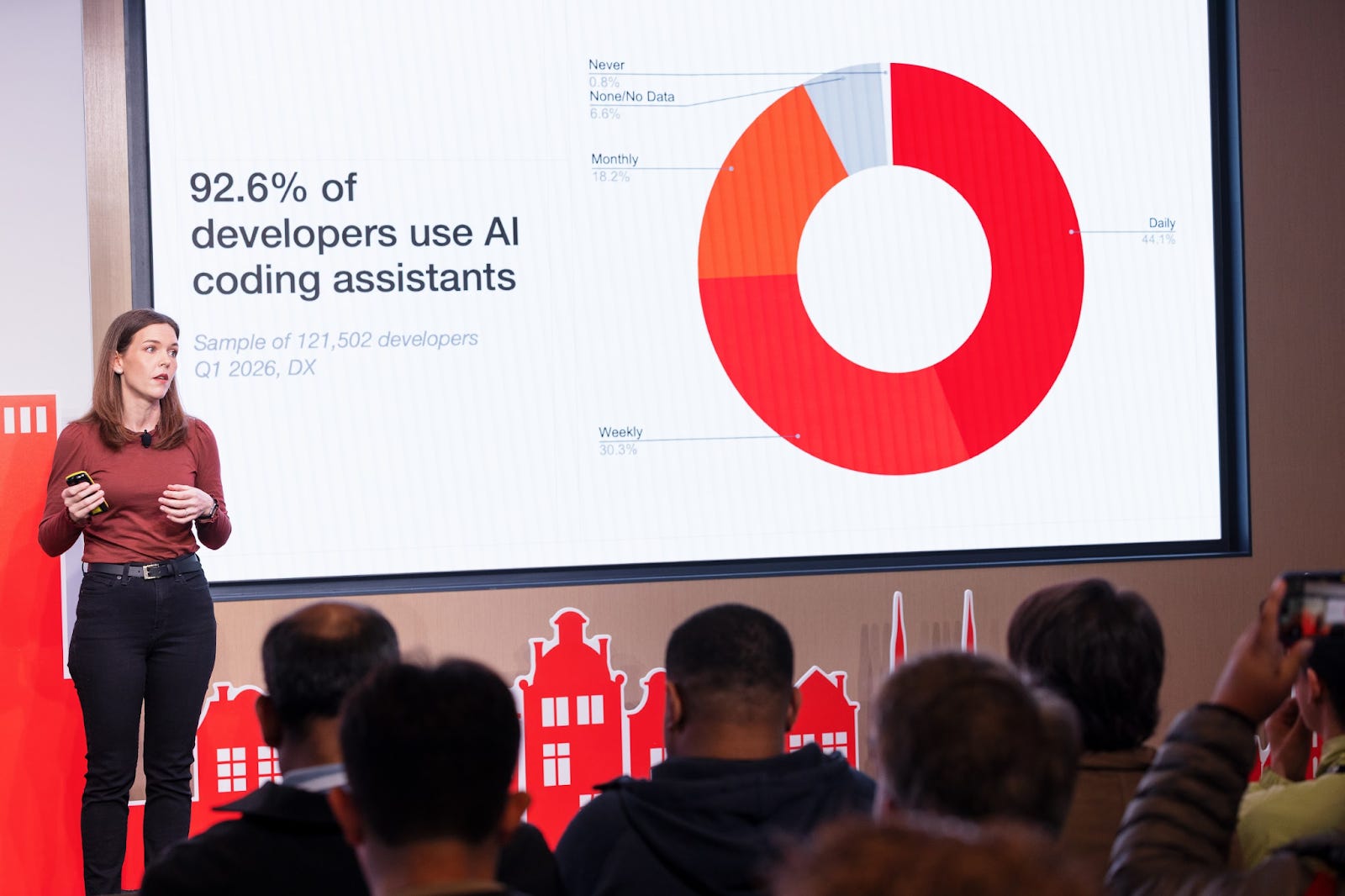
Data vs hype: how orgs actually win with AI. Laura Tacho’s keynote at The Pragmatic Summit. Exclusive data reveals 92% of devs use AI coding tools monthly (!!), “unhealthy” orgs see 2x more incidents, healthy ones have 50% fewer, and other new data.
Building world-class engineering orgs in the AI era. The closing session of the summit dug into what AI-native teams look like, in a fireside chat with GitHub’s former CEO and the CTO of Atlassian.
The Future of Software Development with Martin Fowler. Laura Tacho, distinguished engineer Annie Vella, Martin Fowler, and myself, look back on the event in Utah. Nobody has the AI shift all worked out, which is reassuring!
Mid-level engineers’ quiet crisis. Something I heard that engineering leaders talk about behind closed doors a lot is that mid-career engineers are being left behind by the AI wave. New grads are more productive with the tools, while seniors have more of that all-important experience. Advice on how to catch up fast.
Future of refactoring in an AI-native world. Refactoring legacy code has long been an important tool for keeping software maintainable. With AI generating most code now, is there any point? One answer is “hell, yeah!”
Future of Agile. It was only fitting to consider the future of Agile on its 25th anniversary, in the company of two of the writers of the Agile Manifesto. Amusingly, one major trend is the return of Extreme Programming (XP) practices which predate Agile.
1. Data vs hype: how orgs actually win with AI
At the debut Pragmatic Summit in SF, Laura Tacho delivered the keynote as a well-known expert on developer productivity, and former CTO of DX. She presented new and exclusive data on AI usage, and what currently works with AI adoption. Her session was one of the most popular at the conference – and you can watch the whole thing here. Full subscribers also get access to Laura’s slides.
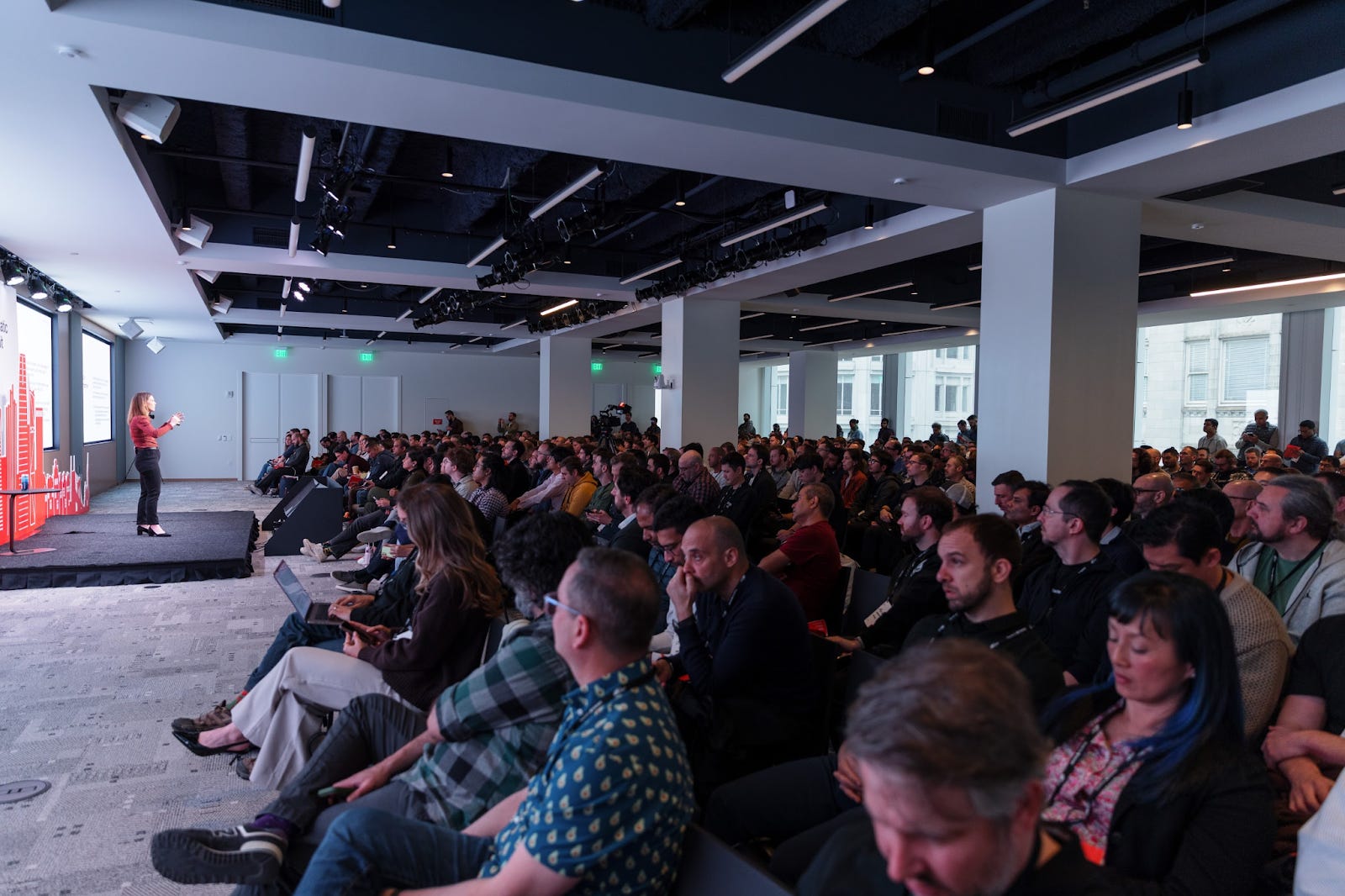
New data points on AI adoption shared at The Pragmatic Summit, provided by DX:
Usage:
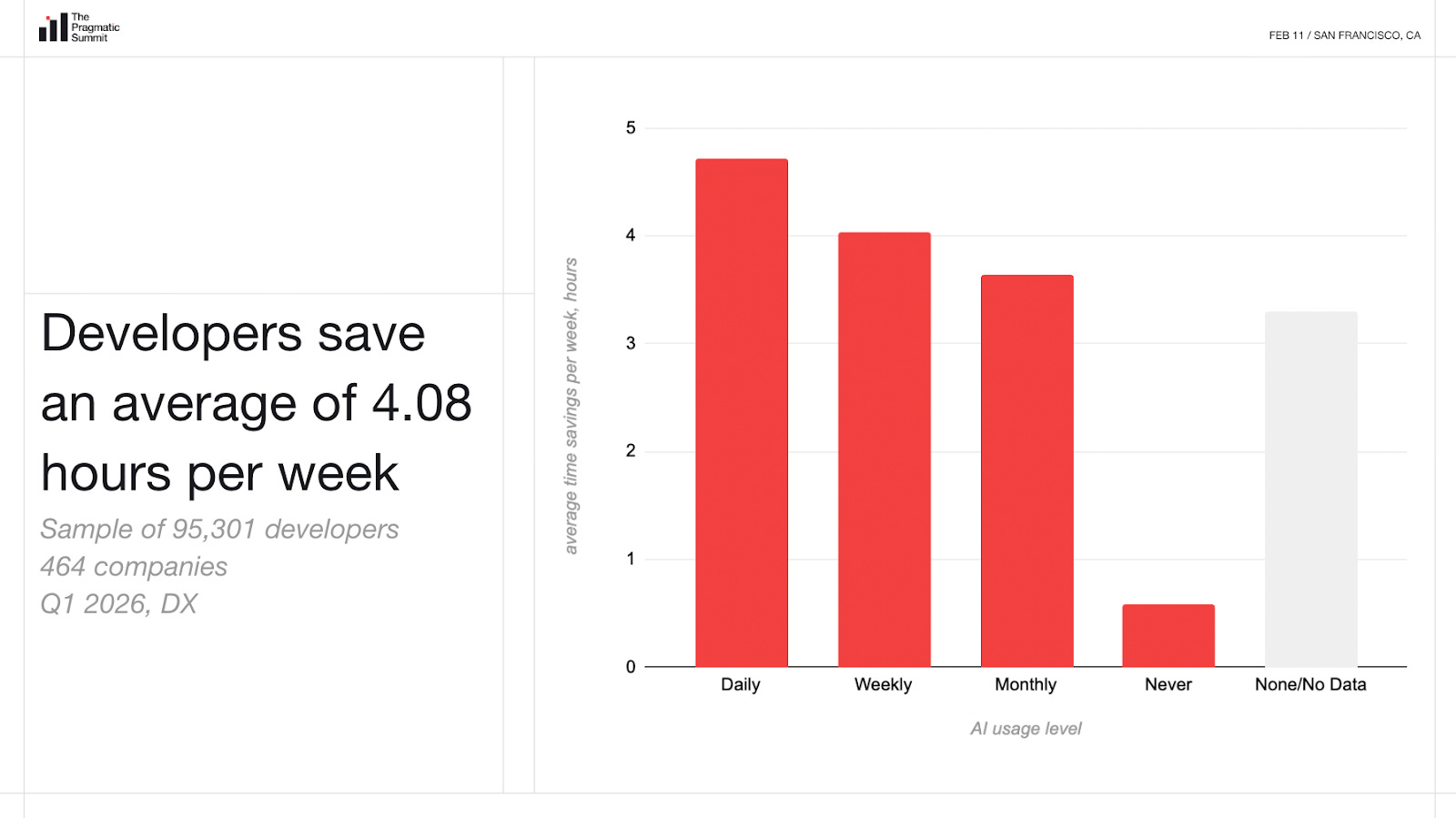
Time management:
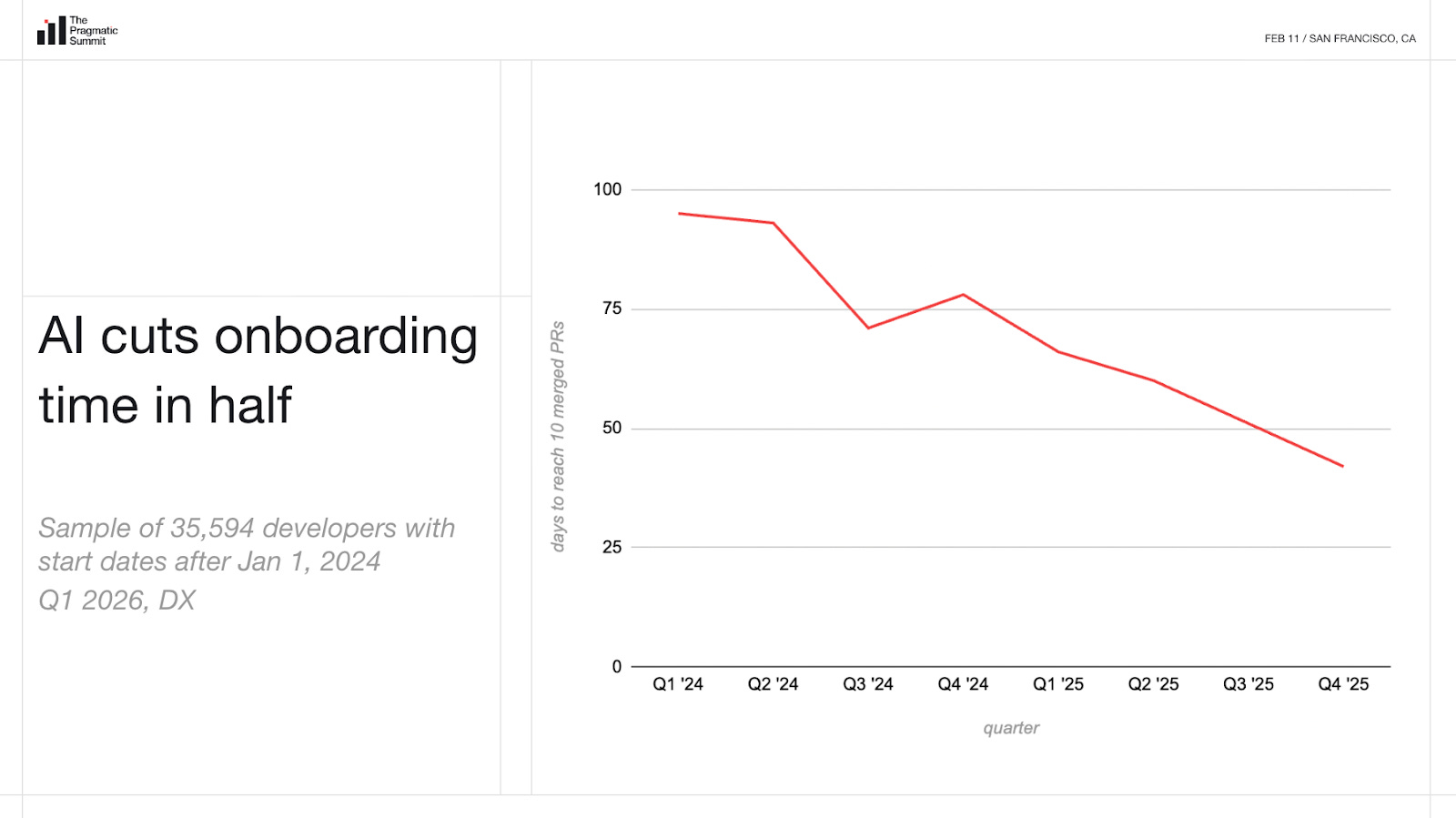
Onboarding impact:
There’s no typical experience with AI, said Laura:
“AI is extremely different in every company because each place has its own problems and its own culture.
Organizational performance is multidimensional and these organizations are just going off to different extremes, based on what they were doing before. AI is an accelerator, it’s a multiplier, and it is moving organizations in different directions.
Some organizations are facing twice as many customer-facing incidents. At the same time, some companies are also experiencing 50% fewer incidents. So, for some companies that have used AI and have a really healthy system, it has amplified that system. They are seeing fewer incidents, moving faster, accelerating with higher quality, higher code maintainability, and higher change competence.
On the other side, we have organizations which were dysfunctional already and are now more dysfunctional: they’re dysfunctional faster. Similarly, organizations are seeing really uneven results economically from using AI.
There are a lot of steep drop-offs when it comes to using AI in a pilot context with production, and then trying to tie it to profit. This is from an MIT study in July 2025, The Gen AI Divide”.
Good analogies for the age of AI might be the space race of the previous century and the age of exploration in the 15th-17th centuries, said Laura.
Wonder of space: space exploration includes immense hope and grounded scepticism.
Defining moments: even though the space race was incredibly expensive – or utterly wasteful – landing on the moon was a big moment for humanity.
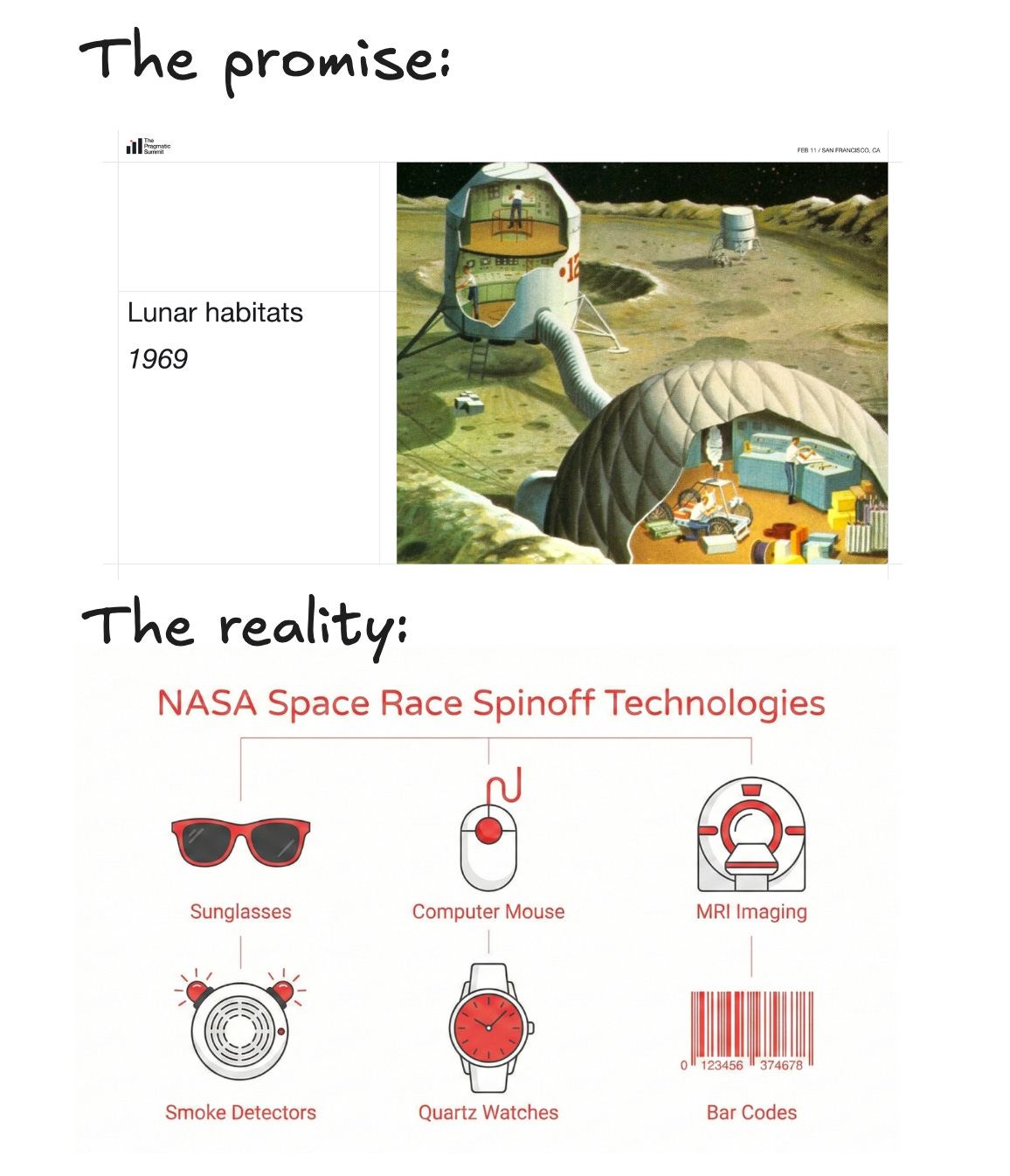
Delivering but not on the grandest ambitions: in the 1960s, going to the moon carried the expectation of human habitation on the lunar surface. As yet, that hasn’t happened but landing on the moon created progress back on Earth:
There’s a rare opportunity to channel the energy around AI into practical improvements, said Laura in closing remarks:
“I want to urge you to find that balance between a sense of wonder, aiming for Mars, and a moon colony, but also understanding we need to solve problems here on Earth and we have to live in this reality.
So, please stay grounded, stay skeptical, stay human. Most of all, stay pragmatic”.
2. Building world-class engineering orgs in the age of AI
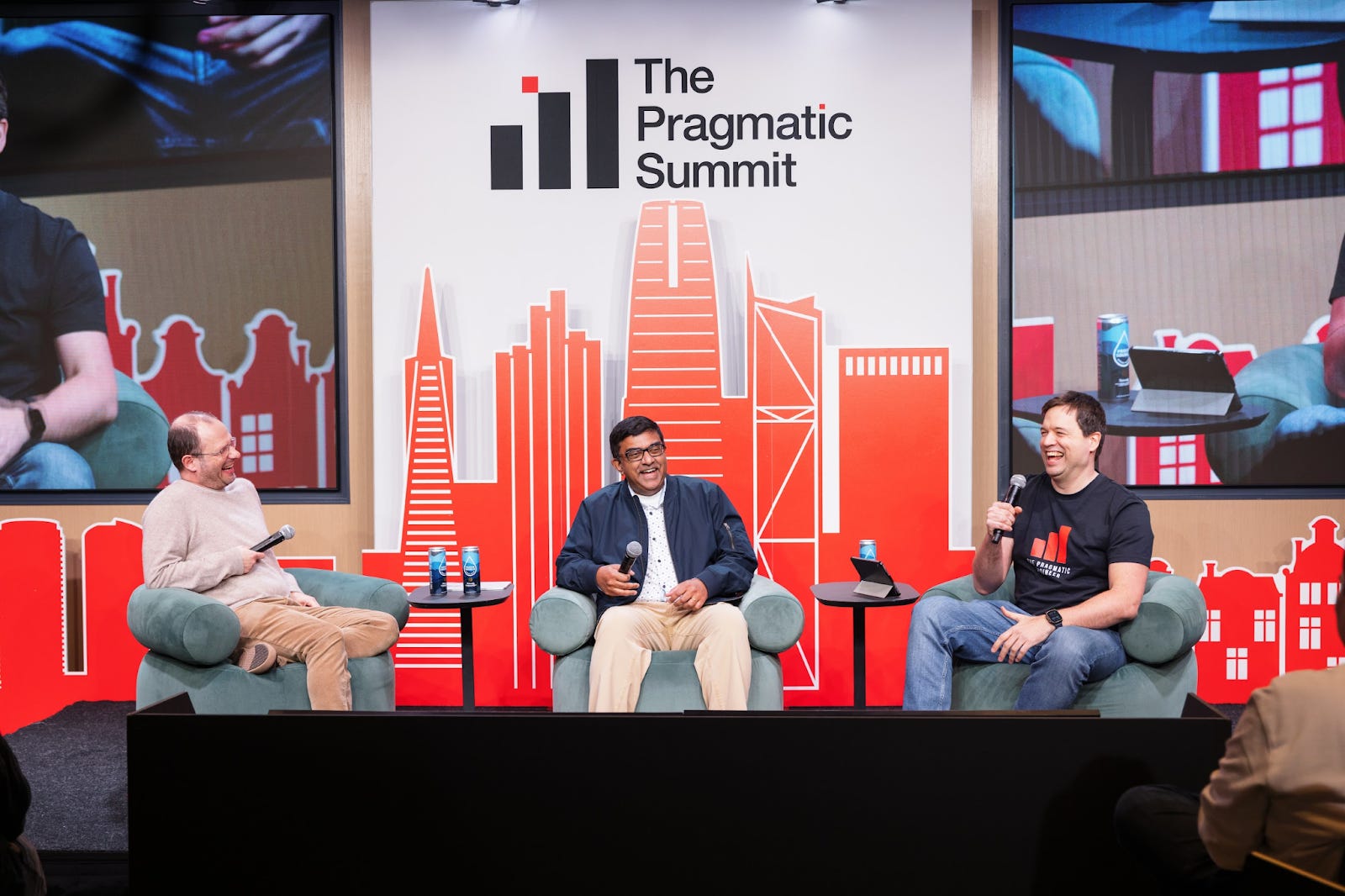
Also at the Pragmatic Summit, Thomas Dohmke (founder & CEO of Entire, and former CEO of GitHub) and Rajeev Rajan (CTO of Atlassian) took part in a fireside chat to explore what a modern, world-class engineering team looks like today. Thomas is building a new, AI-native startup with Entire – an “AI-native GitHub” – while Atlassian has more data than anywhere else on developer productivity after acquiring DX.
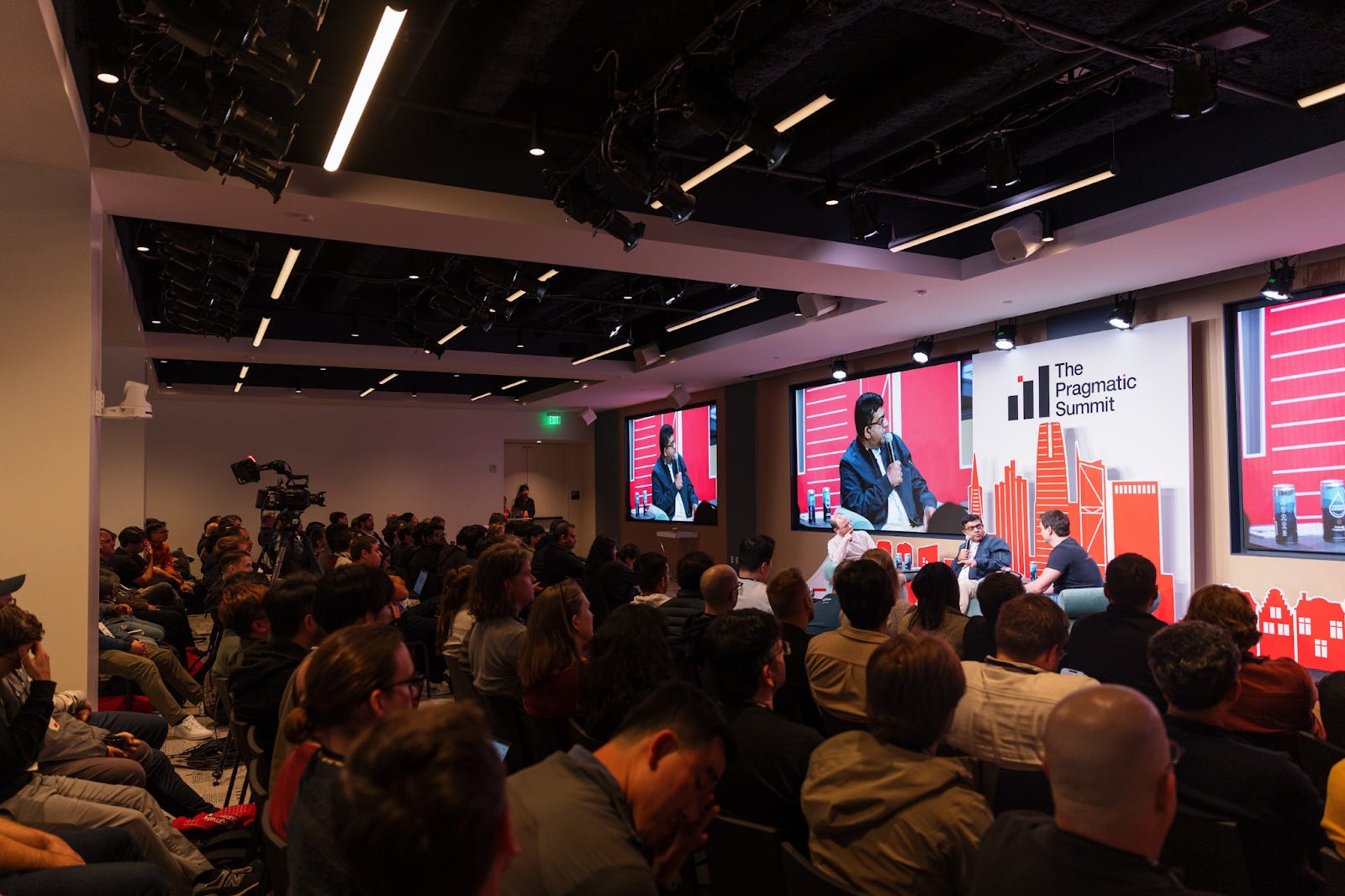
A number of timely, thought-provoking topics were covered by the pair on stage:
Topic #1: What does an AI-native team look like?
Rajeev (Atlassian):
“It starts with the mindset. You have to really believe in doing AI-native work. Some teams at Atlassian have engineers basically writing zero lines of code: it’s all agents, or orchestration of agents. As a result, teams are not necessarily getting smaller, but they’re producing a lot more, sometimes 2-5x more, and creativity is up.
Efficiency framing is missing the point, it’s more about what you can create now with AI which you could not before”.
Thomas (Entire.io):
“AI native is the new ‘cloud native’ and what we are calling AI native now is going to be very different from AI native in a few years’ time.
There’s a lot of BS out there about how all day-to-day tasks are now ‘AI native’, and using agents for everything. I’m a startup founder: most of the time, I’m still dealing with things like old school HR school systems”.
Topic #2: AI makes being distributed an advantage again
Thomas:
“A remote team is kind of lonely, right? But agents basically gave us these sparring partners, these experts that I can just ask “bring some help in for this topic, I need to write an ADR or solve a problem.
This help has taken it to a new level for remote work. I now have my code review agent, my coding agent, my brainstorming agent, my research agents. In some ways, agents have given an advantage again for being remote-first.”
Rajeev:
“Agents have changed things a lot. I remember the days when I was in the office at 2:00AM writing code and would get stuck. All you can do is read the code, then read the code some more until you figure it out.
Well, now you can ask an agent to explain it, or even better, do the code for you. So, with agents it’s gotten even better and easier for us to be able to be distributed.”
Topic #3: Why restrictive corporate IT gives startups a massive advantage
One hilarious exchange between Rajeev and Thomas was about how large companies are slow with AI due to restrictive IT:
Rajeev: “Over the holidays, I bought a laptop because sometimes you can’t install things because of IT. So, I bought my own personal laptop at the Apple store, installed Claude Code, built an app, a bunch of Python scripts, and things like that. As someone who has grown up writing code to my personal bar, it’s super high – as it is for all my engineers. Now, I can write code much faster with agents and things like that.”
Thomas: “To all startup founders: when an investor asks how you’re preventing the incumbent from doing the same thing you’re doing: just tell them the CTO of Atlassian had to buy a laptop on his own money to start coding!
That’s the best answer I can give because it shows you how even relatively agile companies [like Atlassian, a promoter of Agile] that actually develop agile tools, can’t really do what you can do in five minutes!”
Topic #4: Why CTOs are rolling out agents with top-down mandates
Thomas discussed how engineering leaders introduce agentic tools after playing with them as side projects.
“What happened in the last two years through coding agents like Copilot, Cursor, and Devin, is that many CTOs and CIOs, even in the largest banks, realized they can go back to coding. It no longer takes hours to install all the packages and figure out all the problems.
I actually have friends in these spaces who tell me stories of how every night they’d give the agent a task and say: “build me this.” Then, in the morning they would check in with the agent and instruct it to keep going. And then they have their normal day-to-day as CTO of a big bank.
You do that for two weeks and you realize everything is going to change – and that it has to change in my organization. And in contrast to the Twilio founders – in their case, they had developers decide, bottom up, what tools to use – these CTOs and CIOs say: “I don’t want to hear any excuses. We’re going to roll out agents.”
Still, many banks are on very archaic systems and have developers log into Citrix, and jump through all sorts of hoops to use agents.”
Claude Code was introduced in a similar way at Canadian fintech, Wealthsimple, as we covered two weeks ago.
The fireside chat touched on more subjects, including the changing role of software engineers and engineering leaders, and the biggest changes Thomas and Rajeev expect this year.
You can now also watch the other keynote session: How AI is reshaping the craft of building software with OpenAI and the Codex team. Full subscribers can already check out all sessions at The Pragmatic Summit, Q&A included. The other sessions without Q&As will be released next week for everyone.
The remainder of this article covers an event hosted by Martin Fowler.
3. ‘Future of Software Development Summit’ with Martin Fowler
Back in February of 2001, a group of 17 software developers gathered at a ski resort in Snowbird, Utah, where they drafted and signed the famous Agile Manifesto.
Almost exactly 25 years later, Martin Fowler and Thoughtworks organized a retreat at almost the same place in Deer Valley, Utah. He invited around 50 tech leaders from large enterprises and nimble startups, researchers, authors, and experienced, hands-on software engineers. Held earlier this month, it was “The Future of Software Development,” and I was delighted to attend the two-day gathering featuring Annie Vella, Kent Beck, Steve Yegge, Gene Kim, Laura Tacho, – and of course, Martin himself.
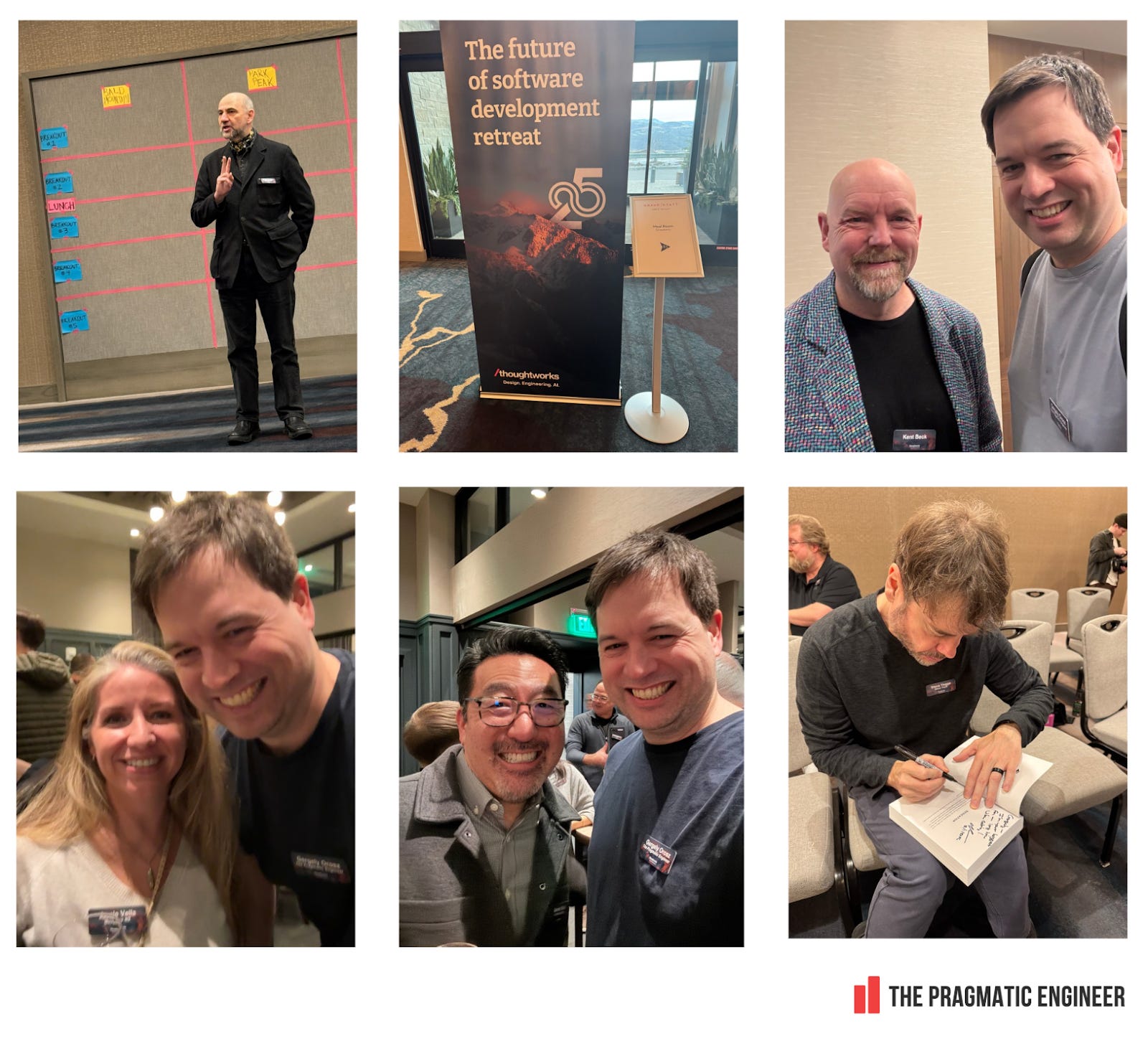
This was no attempt to draft a second landmark manifesto; rather, it was an opportunity to share notes and consider where the tech industry might be headed. It was an intense day of back-and-forth about what we’re seeing and what to make of it.
One declaration was drafted. Kent Beck, Laura Tacho, and Steve Yegge, came up with an apposite statement on inflated expectations upon AI to magically improve everything in workplaces:
“Organizations are constrained by human and systems-level problems. We remain skeptical of the promise of any technology to improve organizational performance without first addressing human and systems-level constraints.
We remain skeptical and we remain human”. – Kent Beck, Laura Tacho, and Steve Yegge.
Personal notes
I have my own thoughts on the topics covered:
Everyone, everywhere is adopting AI rapidly, which in some ways is very surprising. Looking back on tech innovation over the last 20 years, such as mobile, cloud, or even crypto – adoption was gradual. For example, native mobile progressed like this:
Indie devs: in the first few years, startups, experimental individuals, and teams onboarded to the new technology. For native mobile apps, 2008 was when iOS and Android launched their app stores. Between 2008 and 2010, it was mostly indie developers, small teams, and companies that built their apps.
Startups and forward-thinking companies: a few years later, more startups saw the opportunity to jump in. For example, Uber was founded in 2010 and Snap in 2011. Some forward-thinking places also launched in this period, like Starbucks with an iOS app in 2009.
Larger tech companies: Years on, some forward-looking, larger tech companies adopted the technology. For example, Bank of America launched an app in 2011 (3 years into native mobile), Yahoo started to go all-in on native mobile apps from late 2012.
“Traditional” tech companies finally catch up: Eventually, slow-moving companies also move over when it becomes a baseline expectation to use a new technology. For example, Ryanair launched its native iOS app in 2014, six years after native mobile apps emerged.
Contrast that to today, when it seems like everyone is moving all at once. I talked with folks from companies like John Deere (agriculture), 3M (industrial products), Cisco (networking hardware), Wealthsimple (finance), AWS (cloud), and startups, and none could be called “behind.” Every company is rolling out agentic AI tools; for example, Wealthsimple did a global Claude Code rollout just a week earlier.
Based on past experience, you might expect at least some traditional companies with no exposure to AI to wait and see what happens. But I found none doing so.
Traditional, “old school” companies don’t seem to be lagging behind the pace. A traditional company with 10,000+ developers has more than 50% of software development outsourced. This place founded an AI platform team with a mission to eliminate outsourcing activity via a mix of efficiencies from AI tools and targeted hiring.
They have already built an AI debugging agent popular across the whole business that’s connected to all internal systems like monitoring, logging, and internal data stores. It helps a dev pinpoint any and all errors and bugs. This platform team is building more internal tools and hiring aggressively.
It’s a similar story at other trad places: most are already using AI agents, some are experimenting with AI used for large-scale refactors, and others are seeking use cases for agent swarms.
Smaller engineering teams are a certainty. Around 20 engineering leaders – many at large enterprises, some at tiny startups – said that engineering teams are shrinking. One Head of Engineering at a 200-year-old company in the agriculture sector put it like this:
“We are already seeing the end of two-pizza teams (6-10 people) thanks to AI. Our teams are slowly but surely becoming one-pizza teams (3-4 people) across the business”.
To emphasize, this is one of the most traditional companies which sells physical goods and hardware, and whose business has no disruption to fear from AI. But they’ve also adapted!
Observations from Laura Tacho
Laura was kind enough to share her notes on this event for this article: